It is the first sunny day of the year in London. The walk across the Millennium Bridge to the Tate Modern feels euphoric. London is not always a place I feel I belong, but in the sun, the city feels like the only place I could ever be.
The evening before, my dad had cold Facetimed me. We spoke about the weather, my new job, the news and more trivial things. He asked me what my plans for the week were, and I rolled my eyes, because I was sure I’d already told him.
‘I’m going to the new Tracy Emin exhibit at the Tate, Dad,’ I said. He looked unimpressed.
‘Never liked her.’ He said definitively. ‘Bit too graphic, don’t you think?’
I shirked my surprise that my father knew who Tracey Emin is. ‘Not for me.’
‘Hmm.’ Was his response. And the conversation moves on, as it so often does, to blowtorches.
It rings true that the exhibition is graphic. The work on display spans a 40-year career, featuring a replica of her famous Turner Prize-winning ‘My Bed’(1998), as well as new work documenting her recovery from bladder cancer. For those reasons, my father’s description rings true. However, I couldn’t help but find some of the more harrowing elements of the exhibition entirely expected. I don’t mean this as a criticism or an assertion that her work and the curation are boring, by any means. Only that many of the subjects explored in her work are subjects that are rarely novel to her audience. To take that one step further, the graphic nature of the trauma she has endured and the often violent representation of it in her art (whether it be paint strokes of blood, framed pain medication, grief on canvas or abortion in textiles), are graphic, but achingly familiar to those who might have experienced similar.
The bright sun outside does not reach the navy-painted walls and low-lit intimacy of the exhibition. It reaffirms that despite the total, and sometimes extreme, honesty of Emin’s work, it has always been a choice made by her to put those parts of herself on display.
It’s this quality that draws me in.
The exhibition feels like an intimate, maternal insight into the ghosts of the past, present and future of Emin’s life- a woman with trials yet to go through, and work yet to create. I feel as though the work on display is guiding me through the possibilities, pitfalls and power of growing older in a woman’s body. She manages to imbue every lesson learnt, scar earned, and victory won into her art. There is the feeling that Emin is curating a Christmas carol for herself as well as her audience.
Somewhat in line with the Christmas Carol metaphor is the three-dimensional nature of Emin’s work and the exhibit itself that surpasses medium, age and moment.
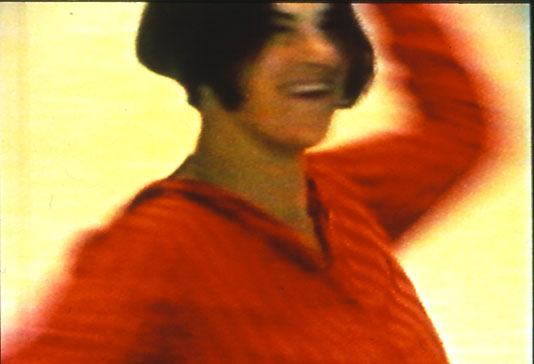
‘Why I Never Became a Dancer,’ (1995), a film in which Emin names the men who shouted sexual abuse at her at a dance competition in 1978. The piece ends with Emin, nearly two decades on, still dancing. As defiant as it is melancholy, the film captures the sense that Emin’s life in experiences, traumas, years and emotions ricochets off every wall and every room of the exhibit. On Super 8 film, with simple cuts and narration (what better way is there to bridge decades), she becomes her own ghost of Christmas present and past.
Those same three dimensions, four, I suppose, if we are including time, are present in every room. The order of the exhibit splices her work so that her lives and second lives are constantly facing each other. It would therefore be easy to approach ‘A Second Life’ as a retrospective. It is consistent and repetitive in the themes of her work, and the exhibition focuses solely on Emin’s work, rather than including other contemporary artworks she influenced.
That is somewhat the trap Emin lays. In the very first room, contextualising several pieces first exhibited in ‘White Cube, My Major Retrospective’ (1982-93), Emin’s first solo exhibition, she writes tongue-in-cheek that at the time she believed it might be the last show she put on. Therefore, she made the decision to consider it a retrospective of her work to date. The overwhelming theme of the exhibition is unflinching, radical reflection on pain, trauma and the feminine experience. What might at first seem repetitive, or no real revelation on the artist’s life and the influences on her work, becomes something more radical. Why would repetition devalue artwork that represents trauma and experience Emin has lived with, and will live with, for all her lives?
There is a humorous and darkly amusing tint to the media and pieces on display. A wooden sculpture of a rollercoaster inspired by her hometown of Margate, titled teasingly ‘It’s Not The Way I Want to Die’(2005). A woman so fearless in her practice and honesty, but somewhat irrationally scared of roller coasters. Pieces on abortion and rape are made from patchworks of quilted material and collage, distinctly feminine in the materials, but still presenting expletives, trauma and a messiness not often associated with embroidery.
The pathway guests take through her work is confronted with a range of media. There is an eclectic but never chaotic range of materials, textures, colours and practice. Quilts made from patchwork fabric and painted cursive thoughts, alongside wooden sculptures and bronze statues.
The cohesion lies in the abjection of each piece, and the themes of the female body, rape, abortion and health. The sheer number of practical media on display represents both an unbridled devotion to creativity and her work and a testament to the new avenues she finds to explore similar emotions and themes. In a piece reflecting on her abortion, featuring a hospital wristband, a bottle of pain medication and a display of children’s shoes, she captures a moment of choice and hypothetical. Two extremes.
She withholds ‘My Bed’(1998) until the penultimate room. To reach her most famous work, and the primary attraction of the exhibit, guests must first walk through a dark corridor with displays on each side of photographs of the stoma she developed after undergoing treatment for her cancer; images of bloody bandages, catheters and her body post surgery.
Each piece, whether it be from her earlier solo exhibitions or the more recent photographs documenting her stoma and the lasting physical repercussions of her battle with cancer, is a mirror image of a continued commitment to documenting the extremes of her experiences.
There is no part of her private life and trauma that she has not laid bare and made vulnerable. And while it’s understandable that might not be for all, particularly for an artist whose work spans several decades and therefore several decades of public perception, scrutiny and prejudice.
There is no piece that better represents this than a piece first exhibited at White Cube, My Major retrospective 1982-93. The pictures are featured in the first room of the exhibition. Replicas of pieces she burnt after her abortion in the 90s, an event the artist refers to as her ‘emotional suicide’.
Like her abortion, her cancer, her rape, Emin does not bury it in her past work; she does not suppress her anger or her lingering emotions or hurt. She uses it to inform and contextualise her ‘second life’.
The sheer number of paintings depicting Emin’s experience and emotional response to rape, as well as their size, in two practical senses, reaffirms something radical. In a world where sexual assault seems to be part of the daily news cycle and delineated as an intrinsic part of the female experience, Emin’s work, in that same reflection of old and new, reminds us that it is still a deeply personal experience. Apocalyptic and everlasting in the memories and lives of survivors.
The overwhelming majority of the work on display is paintings. Most messy, vague figures constructed from liberal strokes of black and white paint. They feature blood, rape, the female body pierced by swords, and nude figures forever unable to escape the acts of violence perpetrated against them.
It’s representative of her roots as a painter, a medium she returns to again and again. The sheer scale and number of her paintings, often similar in their initial appearance, remind us to stay angry, stay feeling, stay true.
Art is sometimes not meant for you. It is sometimes grotesque and hard to look at. You don’t have to like it. If this exhibition reveals anything, it is that Emin has not only understood this but also dived headfirst into it.
I can be sure of one thing. Emin’s work has always been meant for her. She doesn’t need to make something beautiful out of her grief and pain; she simply needs to make something out of it. That is a sentiment meaningful to me, and the millions of others who will attend this exhibition.
After leaving the exhibition, I walked back across the Millennium Bridge to have lunch with my uncle.
He works near St Paul’s Cathedral, and the towering office buildings made from polished steel and glass are another place, another place I do not feel I belong.
I tell him about the exhibit, and he says, in kind, ‘She’s a fantastic painter but a bit angry for my taste.’ He self-corrects somewhat. ‘A bit explicit for my taste, I mean.’
There seems to be a common denominator.
It’s as I reach the Southbank Centre, where I start gathering my thoughts, I see another installation. A neon sign that makes up part of a London takeover that marks the exhibit and the presence of Emin’s work in London.
In pink neon and Emin’s cursive, above the Royal Festival Hall, read the words:
‘You belong here’
Before I start typing, I text my mother. She replies that she is endlessly jealous that she couldn’t go to the exhibit with me. I tell her I’ll take her when she has a free weekend, and that I think she’ll love it. Telling, I think.
Tracey Emin: A Second Life is on show in the Eyal Offer Galleries at Tate Modern until 30th August 2026. For more information and to book tickets, visit the exhibition pager on the Tate website.
Image: Tracey Emin, Why I Never Became a Dancer 1995 © Tracey Emin. All rights reserved, DACS 2026.


