Marking the end of three years of research, Patent 3306x is Appau Jnr Boakye-Yiadom’s pithy exploration of repetition, categorisation, and ephemera through the ages—from biological taxonomy to sex-driven songwriting.
Running concurrently with a show at Modern Art Oxford that includes sound recordings on historic instruments, Boakye-Yiadom’s NıCOLETTı show is as much a presentation of research as it is a reflection of it. Through several media, the show explores repetition as a hegemonic structure, a learning structure, and ultimately ephemera in contemporary culture.
Upon entering, viewers are immediately confronted with a large installation of white t-shirts, all with the same taxonomical illustration of a fish on the front. The t-shirts link the show to its title, named after an 1821 patent filed by Thomas L. Jennings for “dry scouring”, which would later become dry cleaning. Garments, particularly in the world of fashion, are an identity, a Lacanian exteriorisation of the self. But identity here is not individualism—it is category. A bit less liberating, that’s for sure.
But there’s still hope: on the back of the t-shirts, Boakye-Yiadom has printed, in no particular order, names of songs that incorporate sampled sex sounds. Though still a fixed archive, the categorisations are looser. Indeed, they chart a sexual revolution—liberation, for many.
Repetition manifests differently on either side of the t-shirt. However, as the daylight shines through the obliquely angled fabric wall, blending the anterior image with the posterior text, subtle similarities emerge. Categorisation in the latter case is temporary; we are at a point now where sex sounds, no longer taboo, are relatively common in music, so we don’t notice them, much less compile them. But these words sustain the garment. It is the fish that will fade over time, like the sex-sound categorisation, but also like the biological category of fish, which is no longer formally taxonomical. Its use in the modern day is paraphyletic, having faded in significance over time.
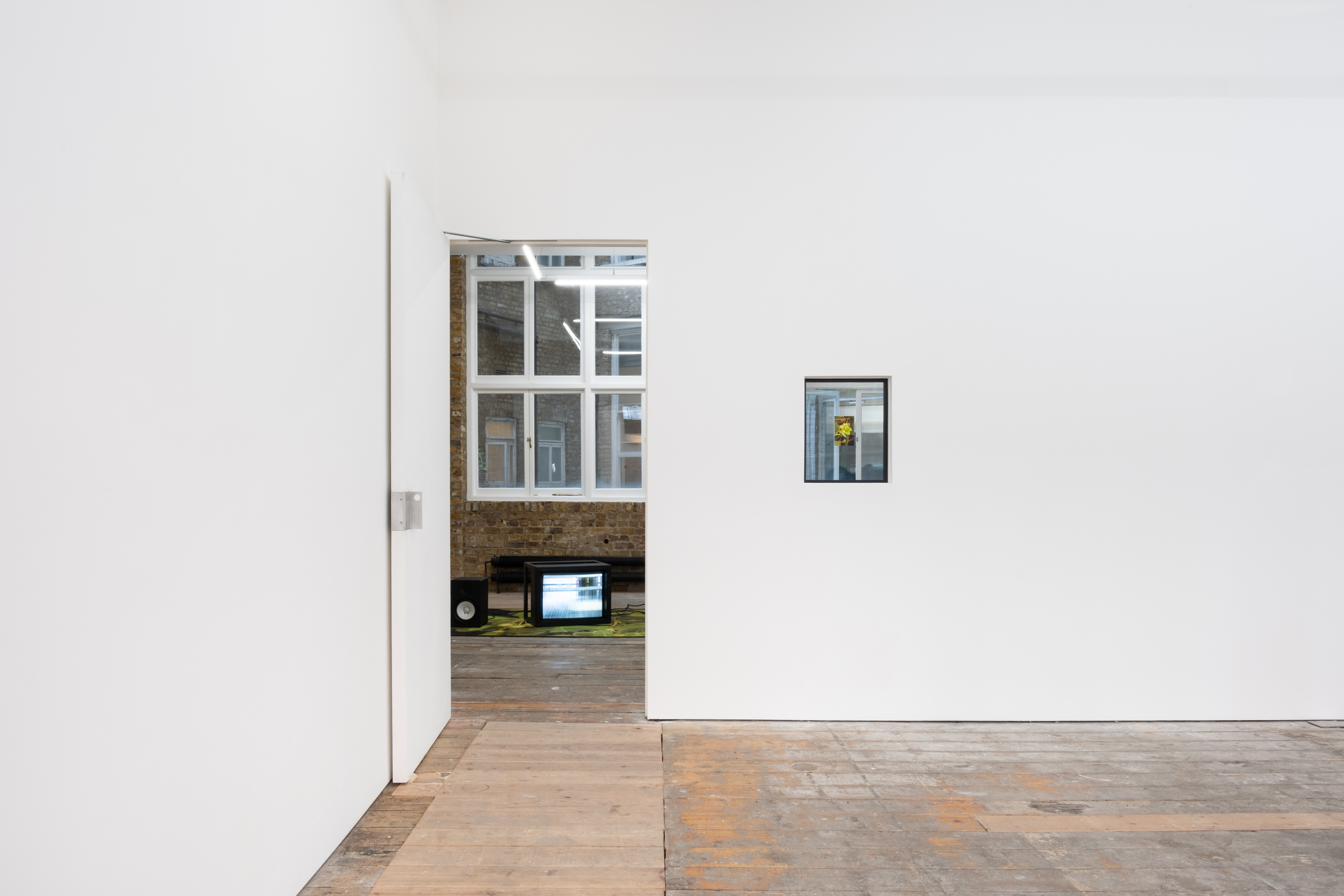
The same is true for the small artist proof that sits in a window between the gallery’s two rooms. On one side is the poster photograph of a Neon Pothos plant and on the other a gallery floor plan with the location of the print marked. The idea is that Boakye-Yiadom takes a new photo every time he includes the proof in a show (naturally, with a new floor plan). Here, archiving, repetition, and categorisation are future commitments that will inevitably fade once the plant dies, or even before that.
Already, we’re seeing the research base of Patent 3306x. Boakye-Yiadom has taken the central themes of repetition and categorisation and tested them in various settings: from archaic taxonomy to charting liberation to meditated commitment. How these themes fare in these tests isn’t quite clear; Boakye-Yiadom is ambivalent, saving conclusions for the research only.
Arguably the most pertinent test is in the final room. The plant motif returns here, through a photo of a Calophyllum inophyllum on a large drum mat. In previous exhibitions, the mat has hosted a drum set, such as in Boakye-Yiadom’s 2020 show at Goldsmiths CCA where he invited viewers to watch him play the drums. The clashing of liberating and cloistering repetition is mirrored here; The repetition of practice, of trial and error, eventually gives way to muscle memory, all the while sitting atop a plant whose name is proof enough of its categorisation.
This time, however, the mat isn’t hosting a drum kit but a television playing a looped video of an old dry-cleaning carousel. The carousel is given a new lease of life on video, a chance to be repeated and redistributed effortlessly. It brings to mind the feeling of death associated with the filmed document, and yet the subject has been revived.
Repetition and categorisation can’t keep up with the video medium as presented here (the speed the carousel spins in front of the camera would make leafing through garments impossible). Video in the mainstream, particularly television, is a powerful tool for hegemonic categorisation of people along many damaging lines, yet here, it struggles. Indeed, the video is a remnant of an unrealised proposal for the exhibition—an unfinished object that disrupts the order of category.
Through these various works, Boakye-Yiadom brings his research and thought process to bear, providing a comprehensive coda to his project while remaining didactic and reflexive. For a show that resists finality, it certainly feels like a comprehensive exploration of its deeply conceptual subject matter.
Patent 3306x is on show at NıCOLETTı until 5th September 2026. To find out more, visit their website.
Featured Image: Installation view: Appau Jnr Boakye-Yiadom, Patent 3306x, solo exhibition at NICOLETTI, London, UK, 2026. Photo: Rita Da Silva.


