Moyra Davey’s short history of four famous artists and their Ukrainian roots is a quiet contemplation on cultural memory, preservation and identity.
Much of what drives cultural displacement, invasion and colonisation today is a future based in the past. It’s long been a quality of the postmodern world that the beliefs that fuelled conflicts and cultures of the past are fair game to whoever shouts the loudest, regardless of what their intentions are. These ideas give voice to Four [чотири], a quartet of portraits of cultural identities, the silence that plagues them, and the duty we have to sit in this silence to remember.
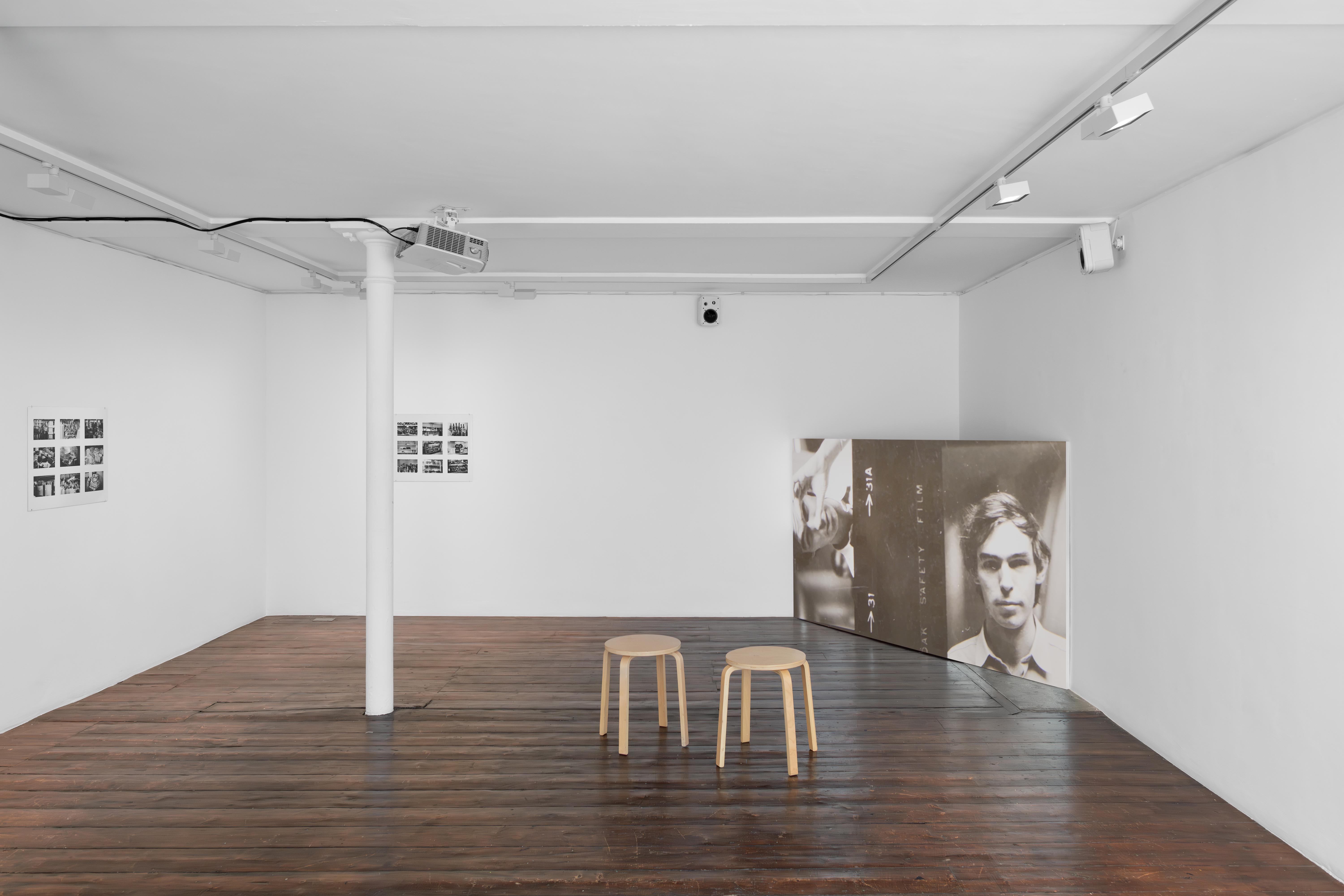
Around the film from which the show gets its name, Moyra Davey exhibits images of industrial communication: newsstands, old televisions, film cameras—even the more subtle types like a shop front or sponsor-branded street clock. These forms of communication are loud; they either grab your attention or seek to expose truths, and in all cases are for mass consumption. But here, trapped in a still, photographic image, they are silent. The shop’s signage peels, the newspapers lie damp in the street, and the televisions turn the other way, hiding their faces. What has passed is now silent.
Not even the names of Davey’s four subjects at the centre of her film are spelt out in sequence: Peter Hujar, Clarice Lispector, Maya Deren and Paul Celan. As the 30-minute work loops, these four names pop up in various explanations about their works; how they comment on silence, identity, and most importantly, their cultural memory. All four of these deceased artists have familial roots in what is modern-day Ukraine, despite either growing up or moving to other parts of the world, taking with them only silent memories.
Over this monologuing, much of which Davey and filmmaker Lyuba Knorozok read (in English and Ukrainian, respectively), are images of Riverside Park in Manhattan, where communities come together through movement—whether dance, sport, or just the movement towards union. With this innocuous footage, Davey closes a circuit that represents the forms of artistic production that her four subjects used in their lifetime, harking back to their roots to fill the silence with something other than noise: Maya Deren famously championed movement, often using it to explain her self-proclaimed ethnic ambiguity. Peter Hujar, on the other hand, used photography to silence his painfully famous, outspoken subjects; not a silence that restricted them, but one that allowed the celebrity persona to break down, creating a silence through which the real person can shine.
As for Lispector and Celan, Moyra Davey cleverly subverts the paradox of their writings and orations about silence through formally experimental narration. The film’s audio track jumps between Davy’s English and Knorozok’s Ukrainian delivery, with subtitles sometimes keeping the English-speaking viewer afloat. I say sometimes because there are passages where Knorozok’s narration is without subtitles, while there are also times when Davey’s does have them. There are times when Knorozok’s narration overlays Davey’s, as you may see on news coverage of a foreign political speech, with subtitles to bring Davey’s dampened voice back into the fore. The amalgamation of voices here creates a noise to fill the void at the centre of Davey’s historical inquiry, but one that is mediated, coming from a co-operation between different perspectives to understand the history of these artists.
There’s a distinct lack of airtime given to war, which, we could argue, gives purpose to an inquiry like Davey’s at this time. But this wouldn’t be far-reaching enough; Four [чотири] is a show that presents the tools for deep cultural reflection, treating the silence of the past as delicately as one would a china plate. War is just one noisy claim to this silence among many—it stands to reason, through the considerate, complex nature of Davey’s work, that noise is not the answer. Many of the current conflicts around the world are grounded in “identity” and claims of ownership based on the past. This past, Davey’s show attests, does not shout out, but remains silent—to understand it and learn from it requires quiet, measured reflection.
Moyra Davey: Four [чотири] is on show at greengrassi until 30th May 2026. To find out more, visit their website.
Image © Melissa Castro Duarte.


