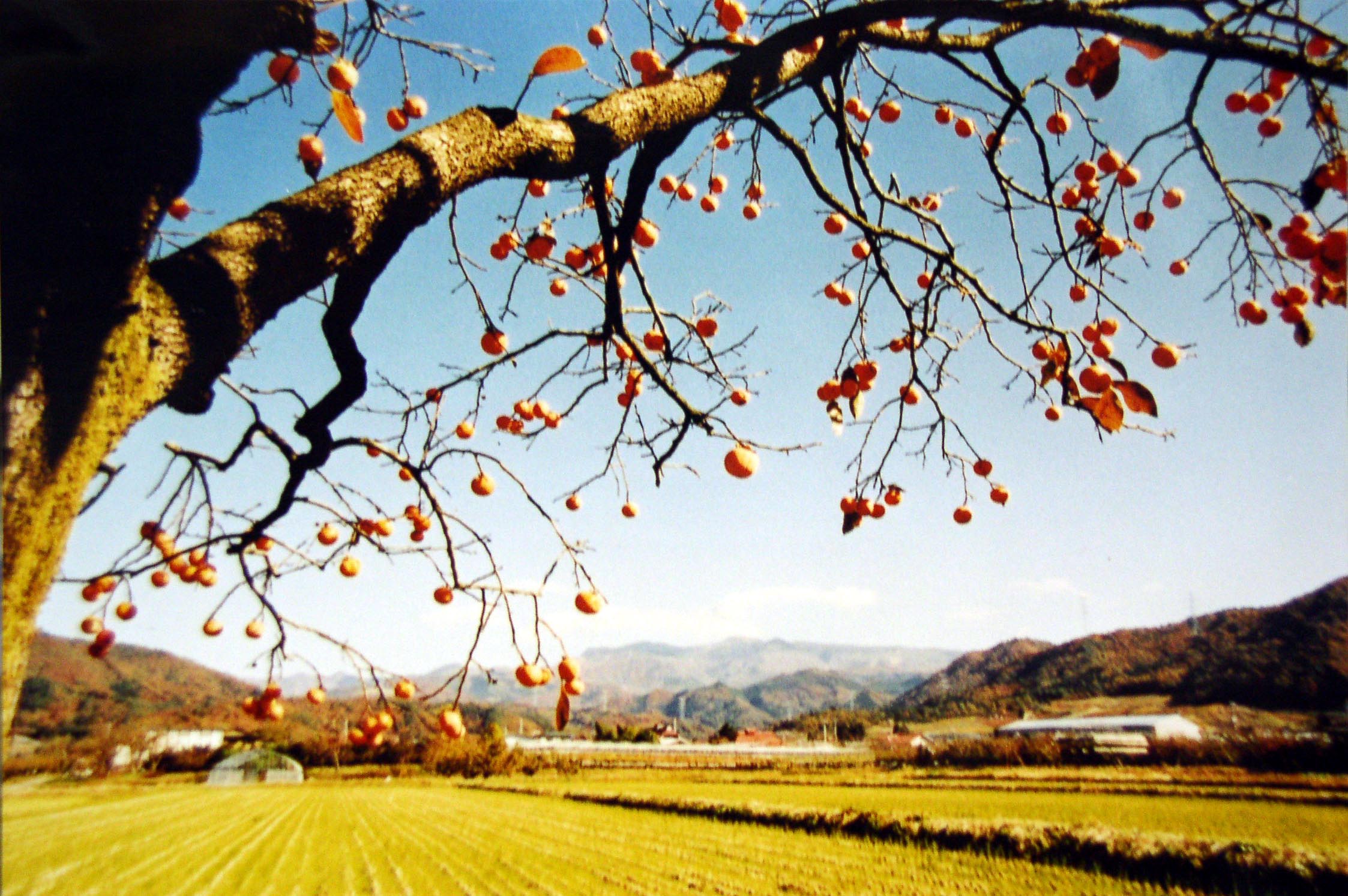
Land Cinema, Becca Voelker’s season curated in tandem with her upcoming book, is playing at Barbican until the end of November.
Land Cinema ‘unearths an enduring green counter culture,’ screening everything from political documentaries to the experimental shorts of celebrated artist Ana Vaz. The programme attempts to capture the essence of “land cinema,” the title and focal point of Voelher’s upcoming book, which addresses many of the same films.
As the season opened, we asked Voelker some questions about the book, the programme, the various ideas that sprout from the two, and what is on the horizon for cinema and the climate.
Your new book “unearths key examples of eco-political counterculture from the 1970s and tries to stimulate visual literacy amongst a generation of readers facing climate breakdown today.” How did this impact your decisions when programming this season (whether that’s a specific era, country of origin, etc.)?
In curating Land Cinema at the Barbican, I chose films from my forthcoming book that offer a range of geographic, cultural, and formal perspectives, and that span the 1950s and today. For example, we have garden films shot from very personal and diaristic perspectives alongside feature-length documentaries made by eco-political collectives. Films featured in the season come from Japan, Colombia, Orkney, the US, and Brazil. I wanted to bring home the idea that land cinema flourished at a moment of growing environmental awareness around 1970 that resonates with debates about climate justice today.
I also wanted to highlight the internationalism of land cinema: although films were made about, for and with local communities, they also circulated in networks of grassroots screenings and political solidarity, connecting local issues to shared planetary conditions. While it can be easy to look at the media today and sense an impending dread at the multiple social and environmental crises enveloping much of the world, land cinema highlights the many courageous projects that have developed over the past half century in the face of extractive exploitation. Land cinema is both critical and creative in this sense: films are ‘oppositional’ in the way they criticise extractive injustice and ‘propositional’ in the way they propose green and countercultural alternatives.
There’s quite a wide range of genres and styles in the season, whether that’s documentaries like Our Voice of Earth, Memory and Future or the experimental films of Ana Vaz. How do you think these different modes inform their didactic approaches to climate justice?
None of the films seems didactic because every one of them situates itself as one perspective, one angle, one emplaced way of seeing. This self-reflexive mode avoids a conventional documentary approach that can assume authority and omniscience. Indeed, from the poetic filmmaker Margaret Tait to the radical documentarian Marta Rodríguez, many filmmakers included in the series eschewed documentary convention because they associated it with a rather colonial and masculinist voice of authority. Each in their own way, the films use poetic montage, conflicting narratives, dream sequences, oral history, archival images and more to remind us that every image is a partial perspective—and that every landscape is a constructed view as well.
The films invite us to ask questions: whose land is this? who works here? whose perspective are we seeing and not seeing? how was this image made? Such questions empower us to make up our own minds about what we’re seeing. This is a far more powerful and politicising experience than passively consuming a didactic documentary, as it trusts us to think for ourselves.
I’m interested in the relationship between humans and landscape in the films, as the level of anthropocentrism in each seems to differ. In your view, is centring the representation of humans, the actants of climate change, still important? Or should it be a more “animal” view of the world, like in Ana Vaz’s films? Or is it something else?
Land cinema confronts human exceptionalism by refusing a conventional distinction between human and other living beings while, at the same time, reminding us that some humans are undoubtedly responsible for extractive practices that lead to habitat destruction, biodiversity loss, pollution, and other forms of climate change. In this way, the films call for human responsibility and humility. In Ana Vaz’s film It Is Night In America, for example, animals feature very prominently (we hardly see human beings and instead, we meet capybaras, anteaters and other wondrous creatures filmed in close up).
But this approach is not implying that humans are not part of the story—it is humanmade highways and zoos that are making the animals alienated and unwell in the first place. Rather than evacuate the film of humans, Vaz places humans (and their built infrastructures) in a wider perspective alongside many other living beings and the land itself. This more holistic view, both humble and responsible, characterises land cinema’s approach to being human in a more-than-only-human world.
The Land Cinema season is at Barbican until 26th November 2025. To find out more and to book tickets, visit the season webpage.
Image © 2001 Ogawa Productions and Peng Xiaolian


